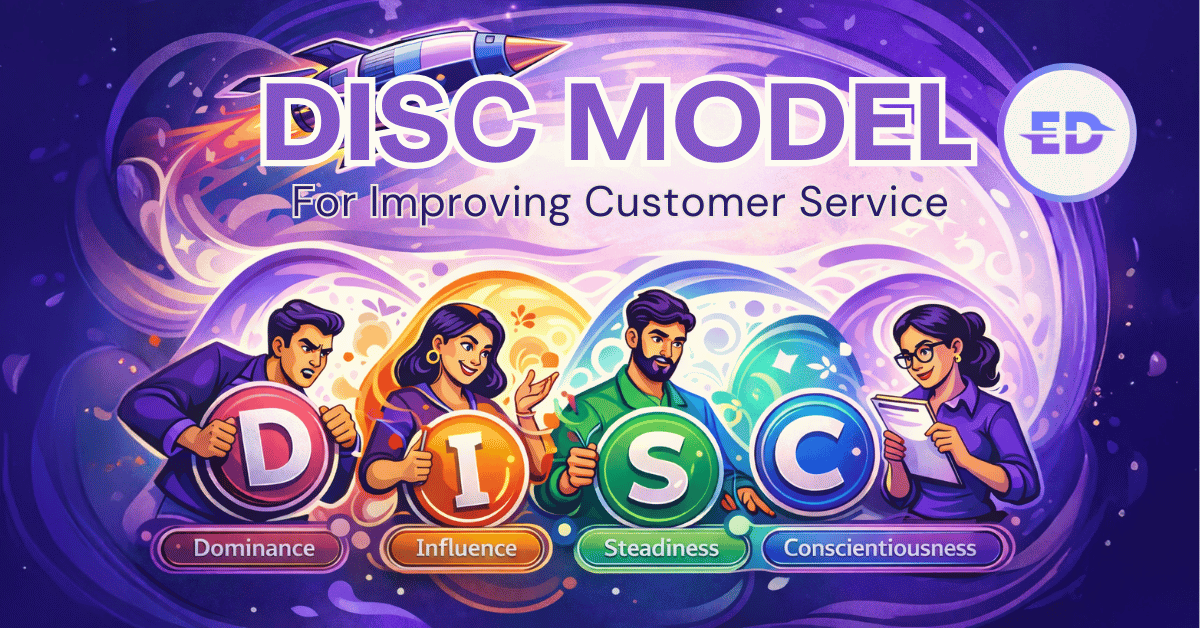
The DISC model, a behavioral assessment tool, categorizes personalities into four main types: Dominance, Influence, Steadiness, and Conscientiousness. By understanding these personality types, customer service teams can tailor their interactions to meet the unique needs of each customer, ultimately enhancing customer satisfaction and loyalty.
Also read: The Complete D2C Marketing Guide, 2026 Edition.
Dominance (D) in Customer Service
Customers with a Dominance personality are decisive, results-oriented, and enjoy taking control. They value efficiency and quick solutions. To effectively serve Dominant customers:
-
Be direct and to the point: Avoid small talk and focus on solving their problem efficiently.
-
Provide options and solutions: Dominant customers appreciate having choices and will respect your competence.
-
Show confidence: Speak assertively and demonstrate that you are knowledgeable and capable of handling their issue.
Example: A Dominant customer may call with an issue regarding a delayed shipment. Instead of explaining the reasons for the delay, offer expedited shipping options and ensure the problem is resolved promptly.
Influence (I) in Customer Service
Influence personalities are enthusiastic, outgoing, and thrive on social interactions. They value positive experiences and relationships. When interacting with Influential customers:
-
Be friendly and engaging: Build rapport with a warm and positive attitude.
-
Share success stories and testimonials: Influential customers enjoy hearing about positive experiences from others.
-
Keep the conversation light: While addressing their concerns, maintain a conversational tone and avoid overly technical details.
Example: An Influential customer may express excitement about a new product but has a few questions. Engage them with stories from other satisfied customers and provide clear, enthusiastic answers.
Steadiness (S) in Customer Service
Steadiness personalities are patient, loyal, and value stability. They appreciate a calm and supportive approach. To cater to Steady customers:
-
Be patient and attentive: Take the time to listen to their concerns and provide thorough explanations.
-
Offer reassurance: Steady customers need to feel secure, so reassure them that their issue will be resolved.
-
Maintain consistency: Provide reliable and consistent service to build trust.
Example: A Steady customer may be concerned about a recurring billing issue. Address their concerns with patience, explain the resolution process in detail, and assure them of consistent support moving forward.
Conscientiousness (C) in Customer Service
Conscientious personalities are detail-oriented, analytical, and value accuracy. They appreciate thorough and precise information. To effectively serve Conscientious customers:
-
Provide detailed information: Ensure your responses are well-researched and accurate.
-
Be methodical: Explain processes and procedures in a clear and logical manner.
-
Respect their need for accuracy: Avoid making assumptions and double-check facts before responding.
Example: A Conscientious customer may have detailed questions about a product’s specifications. Provide comprehensive and precise answers, referencing product manuals or technical sheets as needed.
Tools for Implementing the DISC Model
Several tools can help customer service teams implement the DISC model effectively:
-
DISC Assessments: Online platforms like Tony Robbins’ DISC Assessment or Everything DiSC provide comprehensive personality assessments to understand your team’s and your customers’ DISC profiles.
-
Training Programs: Services like DiscProfile.com offer training programs to help customer service representatives apply DISC principles in their interactions.
-
CRM Integration: Some Customer Relationship Management (CRM) systems, like HubSpot or Salesforce, can integrate DISC data to personalize customer interactions based on their profiles.
Conclusion
By leveraging the DISC model, customer service teams can enhance their interactions, tailoring their approach to meet the distinct needs of each customer personality type. This not only improves customer satisfaction but also fosters loyalty and trust. Implementing tools like DISC assessments, training programs, and CRM integrations can further streamline this process, making it easier for teams to provide exceptional service.
FAQ
How does the DISC model improve customer service? Understanding and adapting to different personality types helps customer service representatives interact more effectively, addressing individual needs and preferences, which leads to higher satisfaction and loyalty.
Can the DISC model be used in any industry? Yes, the DISC model is versatile and can be applied across various industries to improve customer interactions and service quality.
What are some common challenges when using the DISC model? Challenges include accurately identifying customer personalities, training staff to adapt their communication styles, and integrating DISC data into existing systems.
How long does it take to see results from implementing the DISC model? Results can vary, but many organizations see improvements in customer satisfaction and service efficiency within a few months of consistent application and training.
Are there any costs associated with using the DISC model? Costs may include purchasing DISC assessments, training programs, and possibly upgrading CRM systems to integrate DISC data. However, the investment often pays off through improved customer service.
Can the DISC model help with internal team communication? Absolutely. The DISC model not only enhances customer service but also improves internal communication by fostering a better understanding of team members’ personality types and communication preferences.